01 Dec 2025
Still the land of opportunity?
- Infrastructure

Published in Infrastructure Investor, December 2025
Facing a market as vast and competitive as the US, 3i’s Rob Collins examines where best to invest and diversify.
The US infrastructure market is enjoying a surge of interest, with more firms seeking access largely due to the country’s strong artificial intelligence position. The North American economic giant is home to many of the early leaders in the space, as well as heavy government backing for the technology.
Of course, developing and maintaining a competitive edge is not easy. But some of the more established firms are benefiting from tried and tested approaches. 3i, which just celebrated its 80th anniversary, is one such firm. Rob Collins, managing partner for 3i North American Infrastructure Partners, explores what makes the US such an attractive market, as well as which opportunities stand out strongest.
How would you characterise the current investment landscape for infrastructure in the US?
Generally speaking, since the pandemic, US infrastructure has become a more expensive market to invest in. There are a lot more fishermen in the pond, so to speak, and this is driving up prices. The opportunity set we most prefer is found in the mid-market, which is a less competitive space than the mega-market. We focus our efforts on identifying under-the-radar infrastructure opportunities that we can support or put in place high quality management teams to execute on our investment thesis. 3i has been investing in the mid-market since 1945, and has built up a longstanding track record over that period.
Which sectors are attracting the most attention?
Clearly, digital infrastructure has gained the most attention since the pandemic. This has been most prominent across fibre broadband providers and most recently data centre developers, resulting in higher valuations across the board.
We believe that digital infrastructure is attractive and have invested through differentiated strategies such as backing an experienced team to build cell towers or being very selective in the fibre markets we want to go after. While traditional data centre development is less attractive to us, we are exploring adjacent industries such as power generation and other services that will benefit from the same industry tailwinds.
In addition to digital, we’re focused on three additional sectors right now: transportation, environmental services and social infrastructure. Some of our peers will define social infrastructure assets differently, so it’s worth clarifying that we have a wide-span aperture to this area. Our ambition to invest in social infrastructure has led us towards businesses related to food and agriculture production or leasing of equipment, which support other essential services.
How are geopolitical events and domestic politics impacting US infrastructure investing?
There’s a lot of dynamic change right now with respect to global geopolitical events and US politics specifically, which naturally provides challenges and opportunities.
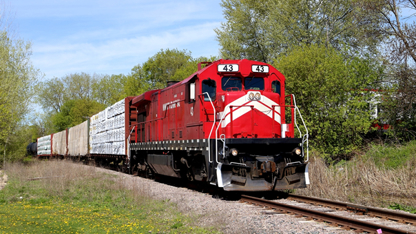
Encouragingly, though, most domestic US infrastructure investments still enjoy broad and very consistent bipartisan support. Regional Rail is an example of this. The company is a short-line rail platform that we acquired in 2019. Regional Rail has been running since 2007 and provides freight transportation, car storage and transloading services across the US and Western Canada, spanning over 875 miles of track.
Covid hit less than a year after we first invested in Regional Rail. Fortunately, both Republican and Democratic states continued to provide grants for rail expansion, as this mode of transport played a critical role in getting the economy back up and running. And since our initial investment in three railroads, we’ve supported Regional Rail in acquiring 14 additional railroads, further strengthening and expanding its presence in the US and Canada.
The pandemic also greatly expanded the definition of core-risk infrastructure, and such investments were thoroughly tested throughout the economic downturn. However, one of the benefits of that two-year period was it really helped us further identify downside risk in our investments, making them even more recession resistant.
How important is sustainability to investment decisions?
ESG is an important part of our process and something we, as a firm, have taken seriously for a long time. In 2008, 3i acquired SLR Consulting, the largest ESG consulting firm in Europe. We held on to the investment in SLR for a decade, which helped us firmly embed ESG criteria in our investment committee processes over almost the last 20 years.
The way in which we champion ESG considerations in our investments is evident in several of our holdings, such as EC Waste. This is the largest vertically integrated provider of solid waste services in Puerto Rico. The company is also the only provider of 100 percent US Environmental Protection Agency (EPA) compliant, regulated and permitted waste disposal on the island.
With our help, EC Waste has made significant investments in its infrastructure and operations technology through sustainable waste practices and continuing to exceed US EPA compliance. Doing so has had a meaningful impact on improving drinking-water quality in Puerto Rico.
This is also important work because the main competition for EC Waste is illegal solid-waste disposal that’s unregulated and can severely contaminate the groundwater through toxic leachate without properly regulated EPA landfill permits. Our work, and consideration of ESG criteria in our investment decisions, is continuing to enhance the quality of drinking water in Puerto Rico, while growing the investment performance of the company.
What are the biggest challenges investors face in the US market?
In terms of finding businesses that perform an essential service, and that have sustainable barriers to entry with demonstrated and durable cashflows, we have a wide lens on identifying such opportunities. The challenge is finding businesses that meet those criteria and are also recession resistant.
An example I would give is Smarte Carte, which is our airport-concession business. For over 50 years, this business has been a key player in North American logistics, providing customers with products like luggage solutions and secure storage in over 300 airports and other locations globally (including 97 of the top 100 airports in the US). In 2017, we invested in Smarte Carte after identifying the company as having the same revenue risk as owning a stake in an airport.
The pandemic demonstrated the most severe downside case of any underwriting model and temporarily paralysed air travel. However, we were pleased to see Smarte Carte not just survive covid but really thrive throughout that period and beyond. Now, international airlines have increased flights, seat capacity, pilot training and new-plane purchases.
As evidence of core-risk infrastructure, Smarte Carte was designated by the US Treasury Department as an essential-service company, and the only business selected in the US aviation-value chain that wasn’t an airport or airline. The company was able to overcome the challenges of that severe economic downturn through optimising pricing and managing costs.
Since then, we’ve worked with Smarte Carte to expand its operations to more locations and geographies. This was while helping introduce the business to the infrastructure-lending market (for the first time in its history) and raising several successful rounds of financing on attractive terms.
AI will be transformational and disruptive in virtually every industry, and infrastructure perhaps has the most to benefit
How can managers differentiate themselves when investing?
Since we were founded in 1945 to help reconstruct the UK after World War II, 3i has been building businesses. In fact, our 3i name stands for Investors In Industry. From the beginning, we’ve invested in infrastructure by identifying best-in-class management teams and partnering with them to realise the full potential of each investment. We also have decades of value-add private equity experience that we leverage throughout our infrastructure underwriting and asset management processes.
We’re also differentiated thanks to our global network of operating partners, which we call our Business Leaders Network (BLN). We’ve been cultivating this network for the last 40 years and actively leverage these relationships to bring industry-leading expertise to our holdings when they need it.
For another example during the pandemic, with Smarte Carte we really relied on a 3i BLN operating partner we put on the company board – Greg Hart, retired COO at United Airlines – to help us navigate that challenging time for the aviation industry.
Going into the pandemic we were prepared, much like the major US airports were, for a complete 90-day domestic airport shutdown. This involved taking a fresh look at expense management and putting in place availability payments with airport partners to help the company perform during that economic downturn.
There’s a lot of dynamic change right now with respect to global geopolitical events and US politics specifically, which naturally provide challenges and opportunities
How do you see opportunities evolving?
Looking ahead, we’re seeking businesses in the US that fit our criteria and play into the AI revolution. Whether that’s power generation or providing support services to operating data centres, we’re finding businesses connected to AI’s growth story. This is similar to the way Smarte Carte gave us great exposure to the aviation value chain, with the same revenue risk of owning an entire airport.
The AI investment theme is deservedly getting a huge amount of attention and disruption concern. But I see this disruptive technology as more exciting than challenging to infrastructure investing. Ironically, we can use AI itself to identify AI infrastructure businesses. This is making for a really exciting time. AI will be transformational and disruptive in virtually every industry, and infrastructure perhaps has the most to benefit.